


Several years ago, a company I advised held a three-hour meeting to decide what to call the people in its design office. Three hours. The argument went round and round: the people who modeled parts and produced drawings wanted to be called “engineers”, the engineers wanted “designer” to remain a lower grade, the drafters were afraid their title would disappear, and human resources wanted something that would fit a salary grid. Nobody was wrong, and nobody won, because the real difficulty was that the three words mean different things in different companies, different industries and different countries.
If you are choosing a career, writing a job advertisement, planning your growth or simply trying to understand who does what in a project, this confusion is costly. So in this guide I will separate the three roles as precisely as the profession allows, show where they overlap, explain who carries which responsibility, and describe how people move from one role to another. If you are new to the field, What Is Mechanical CAD (MCAD)? A Complete Beginner’s Guide gives the background.
The Short Answer
Think of a spectrum that runs from documenting decisions to making and owning decisions.
- A drafter turns an existing design into precise technical documentation: drawings, models and lists that others can build from.
- A mechanical designer develops the solution inside defined requirements: shapes the parts, builds the assemblies, chooses standard components, makes manufacturing-aware decisions.
- A mechanical engineer is accountable for whether the product works, is safe and meets requirements: defines requirements, performs or directs analysis, selects materials and safety margins, approves the design.
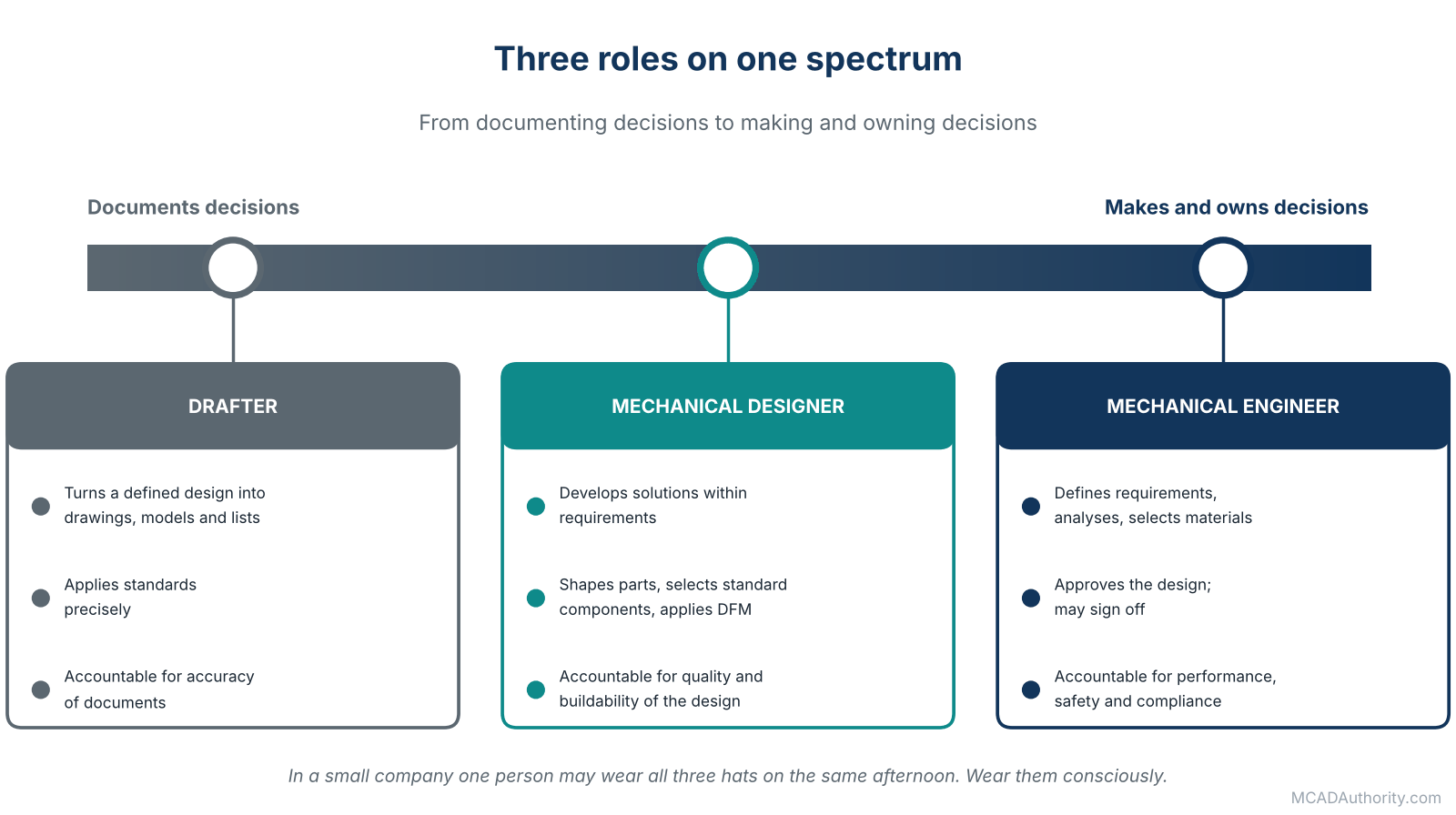
Figure 1. The three roles sit on one spectrum of responsibility.
In a large company these three are often separate people. In a small one, a single person may do all three on the same afternoon. The U.S. Bureau of Labor Statistics describes drafters as people who use software to convert the designs of engineers and architects into technical drawings, which captures the documenting end of the spectrum well. “Mechanical designer” is not a separate category in official statistics; depending on duties, such a person is usually counted among drafters, engineering technicians or engineers.
Why the Words Are So Confusing
Three reasons, in my experience.
- Titles follow history, not definitions. “Drafter” comes from the drawing-board era. “Designer” grew with 3D modeling. “Engineer” carries prestige and, in many places, legal meaning. Companies mix them to attract staff or fit pay scales.
- “Engineer” is protected in many countries. In some places the title can only be used by people with specific degrees or registration, in others it is used freely. Job titles in different countries therefore are not comparable.
- The tools blurred the lines. Modern CAD lets a drafter model, a designer run a stress study and an engineer produce drawings. When everyone can use the same software, the boundary moves from what you can click to what you are responsible for.
That last point is the useful one. The best way to separate the roles is by responsibility, not by tool.
The Drafter
What the work is
A drafter produces the technical documents that tell others how to make or assemble a product. Traditionally this meant drawings on a board; today it means models, drawings, bills of materials and manufacturing files made with CAD. Typical tasks:
- Converting engineers’ sketches, calculations and specifications into complete drawings.
- Applying drawing standards, dimensioning rules and tolerance conventions correctly.
- Producing and maintaining drawing sets, revisions and parts lists.
- Checking drawings for completeness and consistency.
- Updating existing drawings when designs change.
Skills and education
Accuracy, standards knowledge, patience and a good eye for consistency matter most. In the United States, the Bureau of Labor Statistics gives an associate’s degree as the typical entry-level education for drafters, with some roles accepting certificates or diplomas. Technical colleges and vocational schools in many countries offer equivalent programs.
Where the role is going
Honest guidance matters here. The Bureau of Labor Statistics projects little growth in drafter employment (1 percent from 2025 to 2035), and has noted for years that CAD and BIM let engineers and architects take over some tasks that drafters once did. Pure, instruction-driven drawing work is therefore the part of the profession most exposed to automation and to consolidation. The drafters who thrive are those who add modeling skill, manufacturing knowledge, tolerancing expertise and data management to their documentation craft. Many of the best designers I have worked with started as drafters, and they carried a respect for precision that university graduates sometimes lacked.
The Mechanical Designer
What the work is
The designer develops solutions. Given requirements and constraints, the designer creates the geometry, structure and documentation of a product or subsystem. Typical tasks:
- Building parametric parts and assemblies, with design intent captured in the model. See Understanding Design Intent in 3D Mechanical Modeling.
- Selecting standard and purchased components such as fasteners, bearings, motors, profiles.
- Applying manufacturing rules (DFM and DFA) so the product can be made economically. See Design for Manufacturing (DFM) and Design for Assembly (DFA): A Complete Guide.
- Checking fit, clearance and motion in the digital model.
- Preparing drawings, BOMs and supplier packages.
- Proposing improvements, and flagging problems to the engineer early.
Skills and education
Strong modeling and assembly skills, knowledge of manufacturing processes, command of drawing standards and GD&T, and good judgment. The education route is varied: technical diploma, associate degree, engineering technology degree, a trade background plus training, or sometimes an engineering degree. Experience counts heavily.
The word “designer” can mislead
Be aware that “designer” also describes industrial designers, who focus on form, ergonomics and user experience, usually working with surface modeling and rendering. A mechanical designer, by contrast, works on function, structure, manufacturability and documentation. The two collaborate closely, and their work meets where a beautiful shape must become a manufacturable part. See Surface Modeling in Mechanical CAD: A Complete Guide.
The Mechanical Engineer
What the work is
The engineer is responsible for performance, safety and compliance. The engineer defines or validates requirements, performs the technical analysis, makes critical selections and approves the result. Typical tasks:
- Translating customer needs into technical requirements.
- Calculating loads, stresses, deflections, thermal behavior, fatigue and lifetime, or directing simulation work. See Computer-Aided Engineering (CAE): A Complete Beginner’s Guide.
- Selecting materials, safety factors, standards and suppliers.
- Making architecture decisions: layouts, mechanisms, power transmission, materials.
- Ensuring compliance with regulations and safety standards.
- Reviewing and signing off designs; managing technical risk, projects and teams.
Education and licensure
According to the Bureau of Labor Statistics, mechanical engineers typically need a bachelor’s degree in mechanical engineering or mechanical engineering technology, and all U.S. states and the District of Columbia require engineers who sell services to the public to be licensed. Licensing rules, titles and degree recognition differ widely across the world, so check the rules in your country if you plan to use the title or sign documents.
Where the engineer sits
Engineers work mostly in engineering services, research and development, and manufacturing, and many also work in transportation and machinery manufacturing. The Bureau of Labor Statistics projects employment growth of 11 percent from 2025 to 2035 for mechanical engineers, much faster than average, with a median annual wage of $104,110 in May 2025. These figures are for the United States, and I discuss them with more context in MCAD Salaries and Job Outlook.
Side by Side
| Aspect | Drafter | Mechanical designer | Mechanical engineer |
|---|---|---|---|
| Main output | Drawings, models, lists | Designs of parts, assemblies, subsystems | Validated, approved product design |
| Starting point | A defined design or sketch | Requirements and constraints | Customer needs and regulations |
| Decisions | Few; follows instructions and standards | Many on geometry, components, manufacturing | Critical decisions on function, safety, materials |
| Accountability | Accuracy and completeness of documents | Quality and buildability of the design | Performance, safety, compliance |
| Calculations | Rare | Basic checks | Core of the job |
| Typical education | Associate degree, diploma, certificate | Diploma, associate or bachelor’s, or experience | Bachelor’s degree or higher |
| Licensing | Normally none | Normally none | Often required to offer services or sign off |
| Software emphasis | 2D and 3D CAD, drawing tools | 3D CAD, assemblies, PDM | CAD, simulation, calculation tools |
| Typical growth | Toward designer | Toward senior designer, design engineer, CAD manager | Toward lead engineer, specialist, management |
Remember that this table describes tendencies. Individuals and companies stretch these boundaries in every direction.
One Project, Three Roles
Abstract definitions only go so far. Here is how a simple project looks: a guarded drive for a small conveyor.
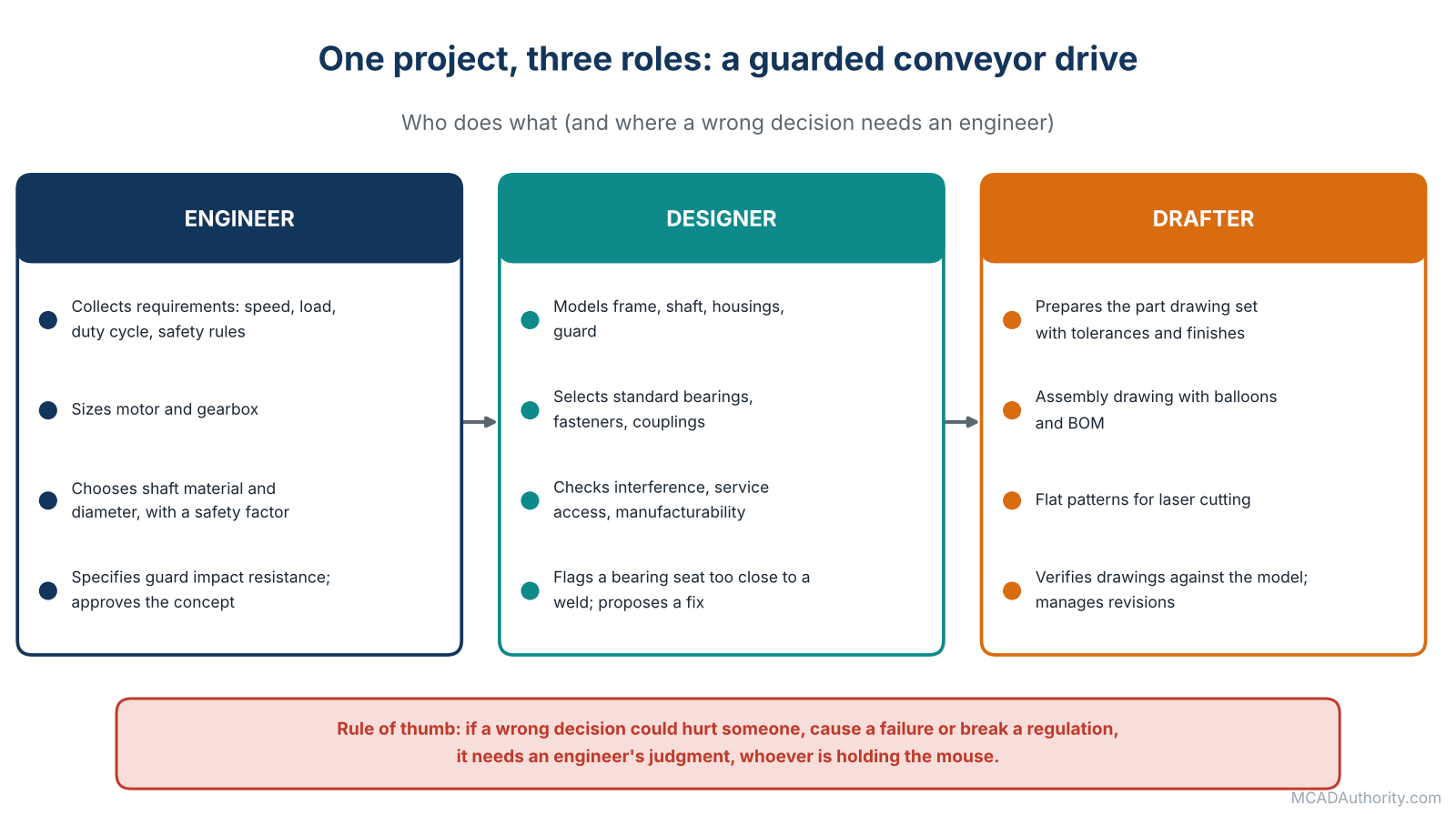
Figure 2. One project seen through the three roles.
The engineer collects the requirements: belt speed, load, duty cycle, environment, applicable machinery safety rules. They size the motor and gearbox, choose the shaft material and diameter with a safety factor, and decide that the guard must resist a specified impact and prevent access to nip points. They approve the concept.
The designer models the frame, shaft, bearing housings and guard. They select standard bearings, fasteners and couplings, ensure the motor can be removed for service, choose sheet metal for the guard because it is cheap and fast, and check interference and clearance in the assembly. They flag that one bearing seat is too close to a weld and propose a modification, which the engineer approves.
The drafter prepares the drawing set: part drawings with tolerances and finishes, an assembly drawing with balloons, the bill of materials, and the flat patterns for laser cutting. They verify each drawing against the model, apply the company standard and manage revisions.
In a small workshop, one person plays all three parts, and that is fine, provided the three hats are worn consciously. The most dangerous moment is when someone who is acting as a drafter makes engineering decisions without realizing it.
The Gray Zone: Where Roles Overlap
Real work is full of questions that do not belong cleanly to one role. A few that I see constantly:
- Fastener selection. The designer picks a size, but an engineer should confirm it where the joint is critical or dynamic.
- Tolerance decisions. A drafter applies tolerances, but deciding which ones function demands is a design and engineering decision. See Geometric Dimensioning and Tolerancing (GD&T): A Complete Guide and Tolerance Stack-Up Analysis for Mechanical Assemblies.
- Weld details and structural frames. Modeling a frame is design work; verifying that it will carry the load is engineering.
- Material substitutions. A supplier suggests an alternative. The designer evaluates manufacturability; the engineer approves the change in properties.
- Simulation. A designer can run a first-pass study, but interpreting results and accepting risk belongs to the engineer.
A practical rule: if a wrong decision could hurt someone, cause a failure in service or break a regulation, it needs an engineer’s judgment, whoever happens to be holding the mouse.
Responsibility and Liability
In my years of managing design teams, the clearest line I could draw was this: the more your decisions affect safety and performance, the more your responsibility, and the more formal your qualification and sign-off should be.
- Know the limits of your competence. If a design involves pressure, lifting, rotating parts at speed, electrical hazards or human safety, involve a qualified engineer.
- Know who signs. Every drawing set should have a clear approval chain. Who checks? Who approves? Who releases?
- Escalate early. A designer who says “I am not sure this shaft is strong enough” on Monday saves everyone a crisis on Friday.
- Document assumptions. When you choose something provisional, note it, so no one mistakes a placeholder for a calculation.
- Respect regulation. Where licensing or professional registration applies, it exists for a reason.
For more on release and approval workflows, see Managing CAD Design Approvals and Release Workflows.
Neighboring Roles You Will Meet
| Role | What it is | Relationship to MCAD |
|---|---|---|
| CAD technician / operator | Often a title for drafting-level work | Close to drafter |
| Engineering technician or technologist | Applies engineering principles under an engineer’s direction; often builds and tests | Overlaps designers, often with test and prototype skills |
| Industrial designer | Form, ergonomics and user experience | Provides shapes that mechanical designers make manufacturable |
| Manufacturing engineer | Plans how the product will be produced | Reviews designs for producibility |
| CAD manager | Standards, templates, software, training | Often a senior designer or drafter by background |
| Simulation analyst | Specializes in analysis | Works with designers on models |
| Product designer | Broad term mixing the above, depending on the company | Varies |
Credentials and Numbers at a Glance
The Bureau of Labor Statistics publishes occupation data that illustrate the contrast, though it covers only the United States and should be read with care.
- Drafters: typical entry-level education is an associate’s degree; median annual wage $68,090 in May 2025; employment projected to grow 1 percent from 2025 to 2035.
- Mechanical engineers: typical entry-level education is a bachelor’s degree; median annual wage $104,110 in May 2025; employment projected to grow 11 percent from 2025 to 2035.
- Mechanical engineering technologists and technicians: typically an associate’s degree or other postsecondary training; median annual wage $68,730 in May 2024 (the most recent figure I verified for this occupation).
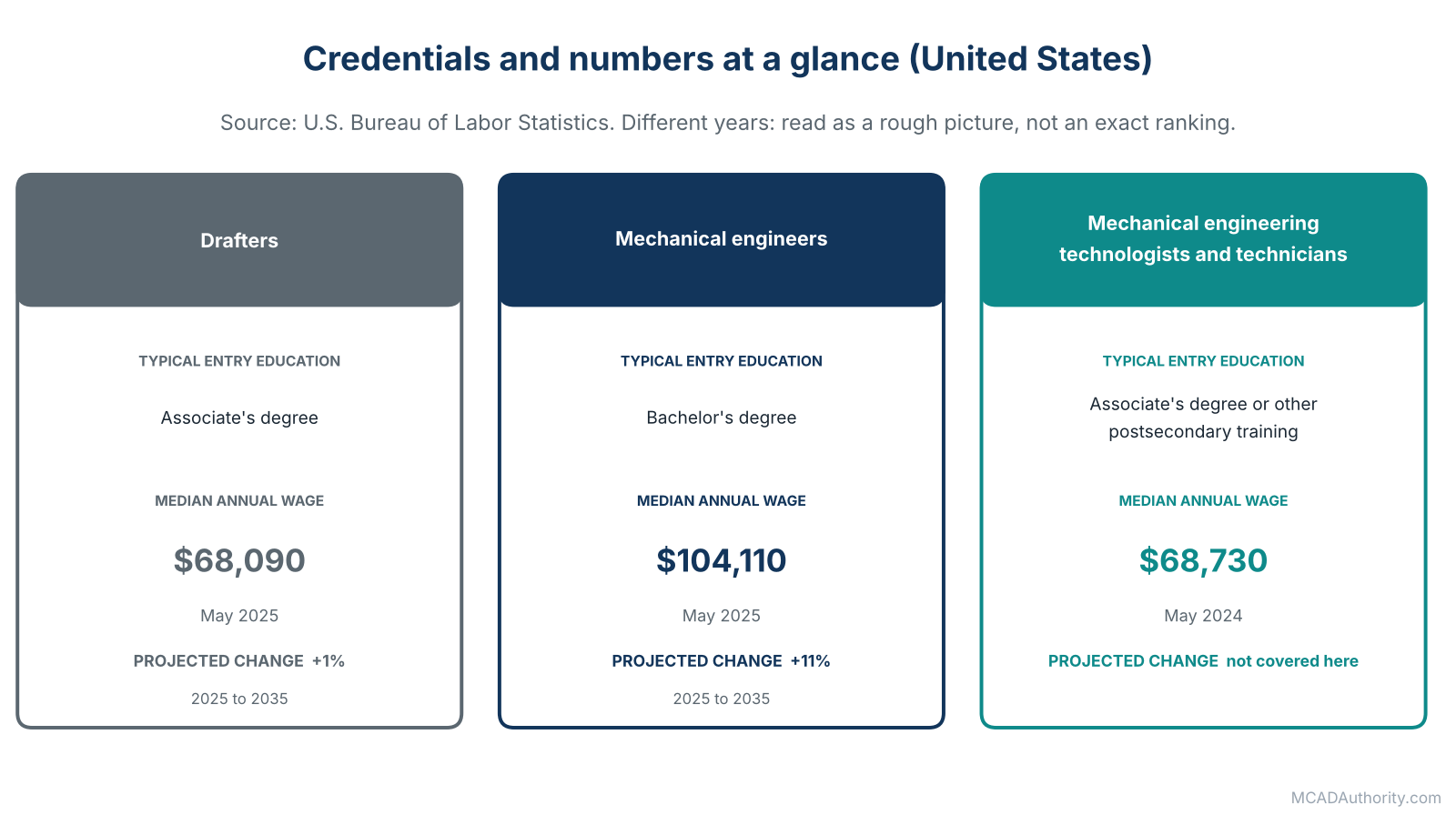
Figure 3. Education and pay for the three occupations in the United States (different reference years).
Different years appear in this list because the Bureau updates occupations at different times, so compare them as a rough picture, not an exact ranking. A career strategy based only on starting pay would miss the point: the real gap between roles is responsibility and the range of decisions you are trusted to make, and a designer who grows in judgment can progress a long way without changing title. For the full picture, including factors beyond title, see MCAD Salaries and Job Outlook.
Moving Between Roles
From drafter to designer
The most common and most natural move. What you need:
- Solid parametric modeling and assembly skills.
- Manufacturing knowledge: spend time in the workshop.
- GD&T and tolerance competence.
- The habit of questioning instructions and proposing alternatives.
- A portfolio of designs, not only drawings. See How to Build a CAD Portfolio That Gets You Hired.
From designer to design engineer or engineer
Possible in two ways: experience-led (in some companies and countries, a senior designer takes on engineering responsibility) and education-led (a part-time or evening degree, often with employer support). Plan your fundamentals: mechanics, materials, strength of materials, thermodynamics and mathematics. Where licensure matters, check the exact requirements for your jurisdiction early, because some routes demand specific accredited degrees.
From engineer to specialist or manager
Engineers may deepen into analysis, tolerancing, materials or product architecture, or move into project management and leadership.
Sideways: CAD manager, trainer, support, freelance
CAD managers, trainers and technical support specialists are often experienced designers who enjoy standards, teaching and problem solving. Freelancing is another path; see Freelancing as a CAD Designer: Getting Started.
For a general starting point on all of this, read How to Become a Mechanical CAD Designer.
Which Role Fits You? A Short Self-Check
- Do you enjoy precision and order, and take pleasure in a perfectly consistent drawing set? Drafting and detailing may suit you.
- Do you enjoy solving shape and fit puzzles, choosing components and making things buildable? Design is probably your zone.
- Do you want to own technical risk, calculate, analyze and decide how a product must behave? Engineering is where that lives.
- Do you like explaining, standardizing and helping others work better? Look at CAD management or training.
None of these is a lesser path. A good drafter is worth far more than a careless engineer, and a company needs all three kinds of competence.
What I Look For When I Hire
For the record, since people always ask.
- Drafter / CAD technician: accuracy, consistency, willingness to learn manufacturing, ability to take review without defensiveness.
- Designer: modeling quality, evidence of design thinking, manufacturing awareness, clear communication.
- Engineer: sound fundamentals, practical judgment, the ability to explain a calculation simply and honest recognition of what is not yet known.
In all three cases, the candidates who impress me most say “I checked it against the workshop” and “I asked for a review”.
Common Misconceptions
- “A designer is an engineer who failed to graduate.” No. Designers and engineers have different strengths, and the best design teams need both.
- “CAD will replace drafters, then designers.” Software absorbs routine tasks. Judgment, communication and responsibility are much harder to automate.
- “An engineer does not need CAD skills.” Engineers who model well reduce delays and misunderstandings, and many do their own concept models.
- “The title determines the pay.” Industry, location, specialization and responsibility often matter more.
- “Going from one role to another requires starting over.” Skills carry over, which is why many strong engineers began as technicians or drafters.
Final Thoughts
Back to that three-hour meeting about titles. In the end we agreed on a simple principle that I have used ever since: define each role by the responsibility it carries, and let the title follow. Who is accountable for the geometry? Who checks the calculation? Who signs the release? Once those questions have names attached, the argument about words fades.
For you, the useful question is not “which title is best?” but “which responsibilities do I want, and what must I learn to be trusted with them?” Answer that, and the path becomes clear.
Where to go next: read How to Become a Mechanical CAD Designer for a practical route into the field, and MCAD Salaries and Job Outlook for a realistic look at pay and demand.